The technology explainer
What is Kaspa
Kaspa (KAS) is a proof-of-work Layer-1 cryptocurrency built around a blockDAG structure rather than a single-file chain. This page explains the protocol facts that shape how Kasper Transactions mines and secures the network.

Origins
A fair launch, five years in the making
Kaspa launched on November 7, 2021. It was a fair launch: no premine, no ICO, no venture capital allocation, and no founder token allocation. Kaspa has a fixed maximum supply of approximately 28.7 billion KAS.

The core innovation
BlockDAG: keeping the blocks a single chain would throw away
In a traditional single-file blockchain, when two blocks are found at nearly the same time, only one survives and the other is discarded as an orphan. Kaspa's core innovation is the blockDAG, short for Block Directed Acyclic Graph. Instead of a single-file chain, a block in Kaspa's DAG can reference multiple previous blocks, so parallel blocks that arrive close together are all kept and ordered rather than wasted.
That structural change is what allows Kaspa to move faster than traditional single-chain proof-of-work blockchains without giving up proof-of-work security.
Consensus
GHOSTDAG puts the DAG into a single order
A DAG full of parallel blocks is only useful if the network can agree on one final order. That is the job of GHOSTDAG, short for Greedy Heaviest Observed SubTree DAG.
GHOSTDAG is the consensus protocol that orders the blocks in the DAG into a single, deterministic sequence. It does this by classifying blocks as "blue," meaning accepted and contributing to consensus, or "red," meaning excluded. GHOSTDAG is part of the PHANTOM protocol family, which was built on the earlier GHOST concept.
Kaspa's design draws on the research work of Yonatan Sompolinsky, whose GHOST, PHANTOM, and GHOSTDAG research underpins this ordering approach.
The Crescendo upgrade
From 1 block per second to 10
The blockDAG and GHOSTDAG together made a major throughput jump possible. The Crescendo network upgrade moved Kaspa's mainnet block rate from 1 block per second to 10 blocks per second on May 5, 2025, without abandoning proof-of-work security.
Mainnet launch at 1 BPS
Kaspa launches with a fair distribution model and an initial block rate of 1 block per second, already fast relative to most single-chain proof-of-work networks.
Crescendo: 10 BPS
On May 5, 2025, the Crescendo upgrade raises Kaspa's mainnet block rate to 10 blocks per second, a practical effect of the blockDAG and GHOSTDAG design working as intended: much faster block production and confirmation than traditional single-chain proof-of-work blockchains.
Mining algorithm
kHeavyHash: a Kaspa-exclusive algorithm
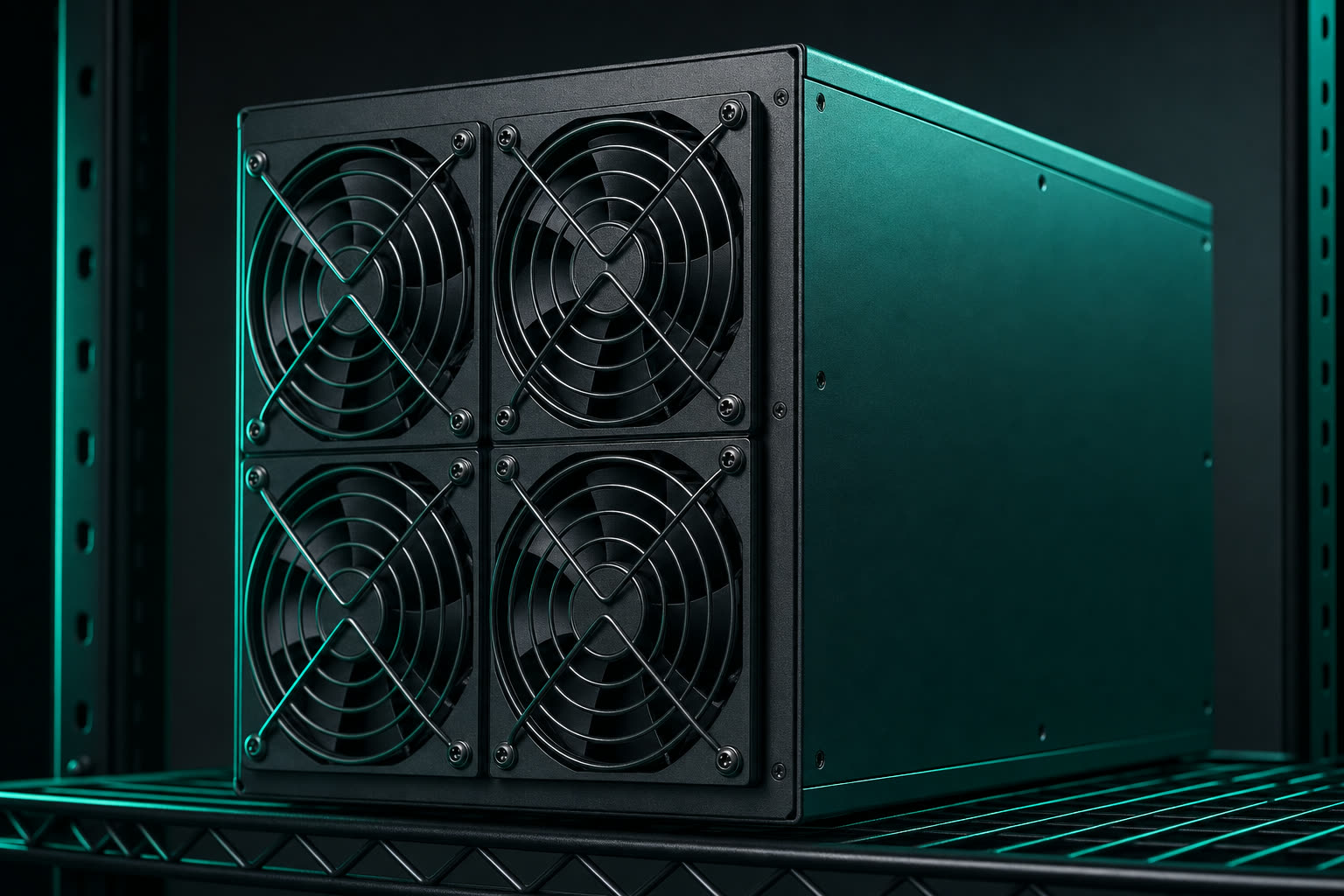
Kaspa is mined using kHeavyHash, an algorithm exclusive to the Kaspa network. It combines a matrix-multiplication step with a SHA-256 pass. Because it is Kaspa-specific, kHeavyHash is mined with dedicated ASIC hardware built for that algorithm, such as the IceRiver KS-series miners that Kasper Transactions operates.
This is the algorithm that connects Kaspa's protocol design to the physical hardware side of our business, covered in detail on the Hardware page.
See our hardware →