The ASIC hardware
Hardware
From the entry-level IceRiver KS1 to the current-generation IceRiver KS7, our hardware roadmap reflects a deliberate move toward greater efficiency and throughput on Kaspa's kHeavyHash algorithm.
Early phase
IceRiver KS1: the validation cluster
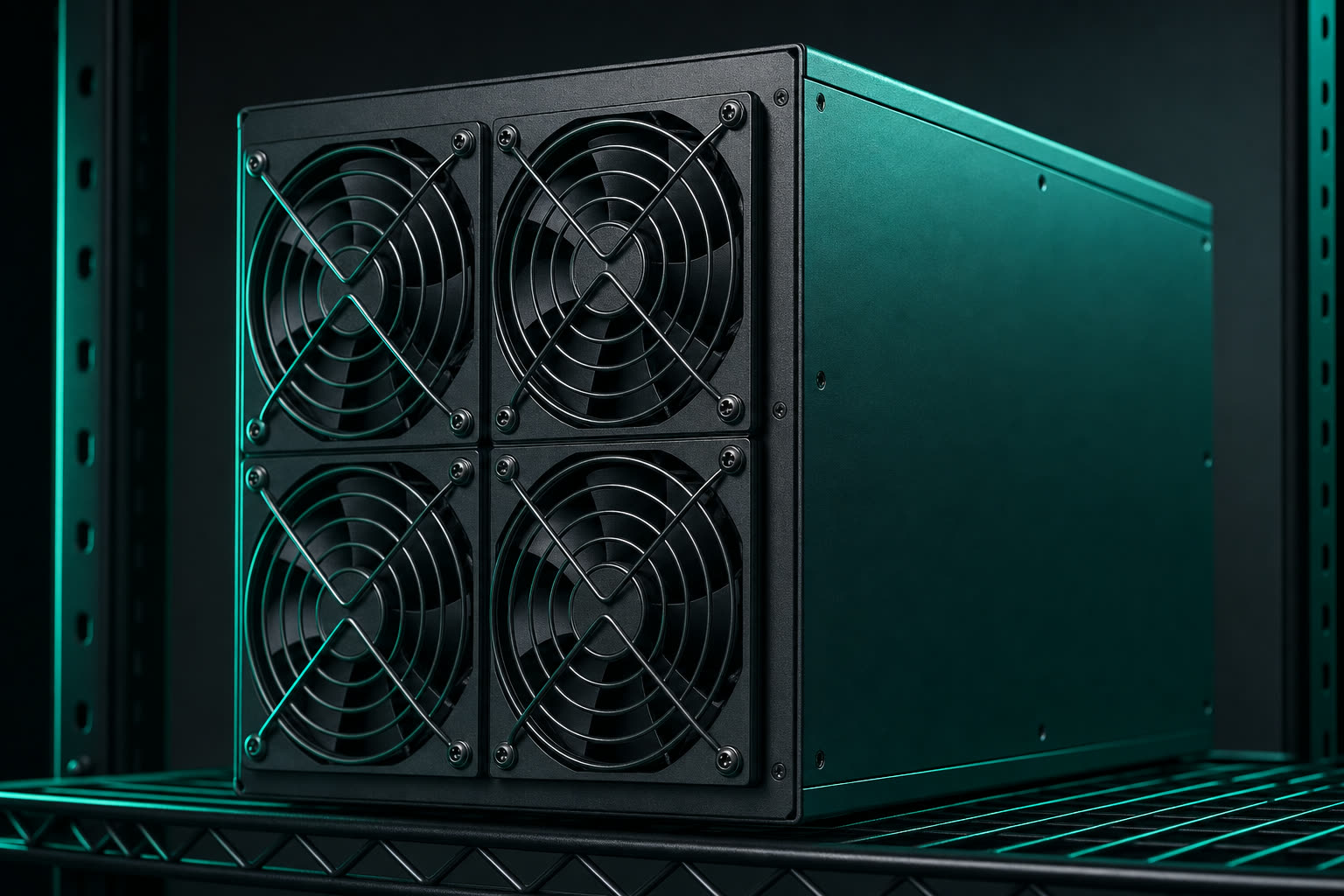
Kasper Transactions started in 2023 with a small cluster of IceRiver KS1 miners, an entry-level kHeavyHash ASIC. The KS1 was early-generation Kaspa mining hardware used to validate the model. It proved that solar-aligned compute could reliably support Kaspa's blockDAG settlement flow before the company invested in larger-scale hardware.
Current generation
IceRiver KS7: the hardware we are leapfrogging to
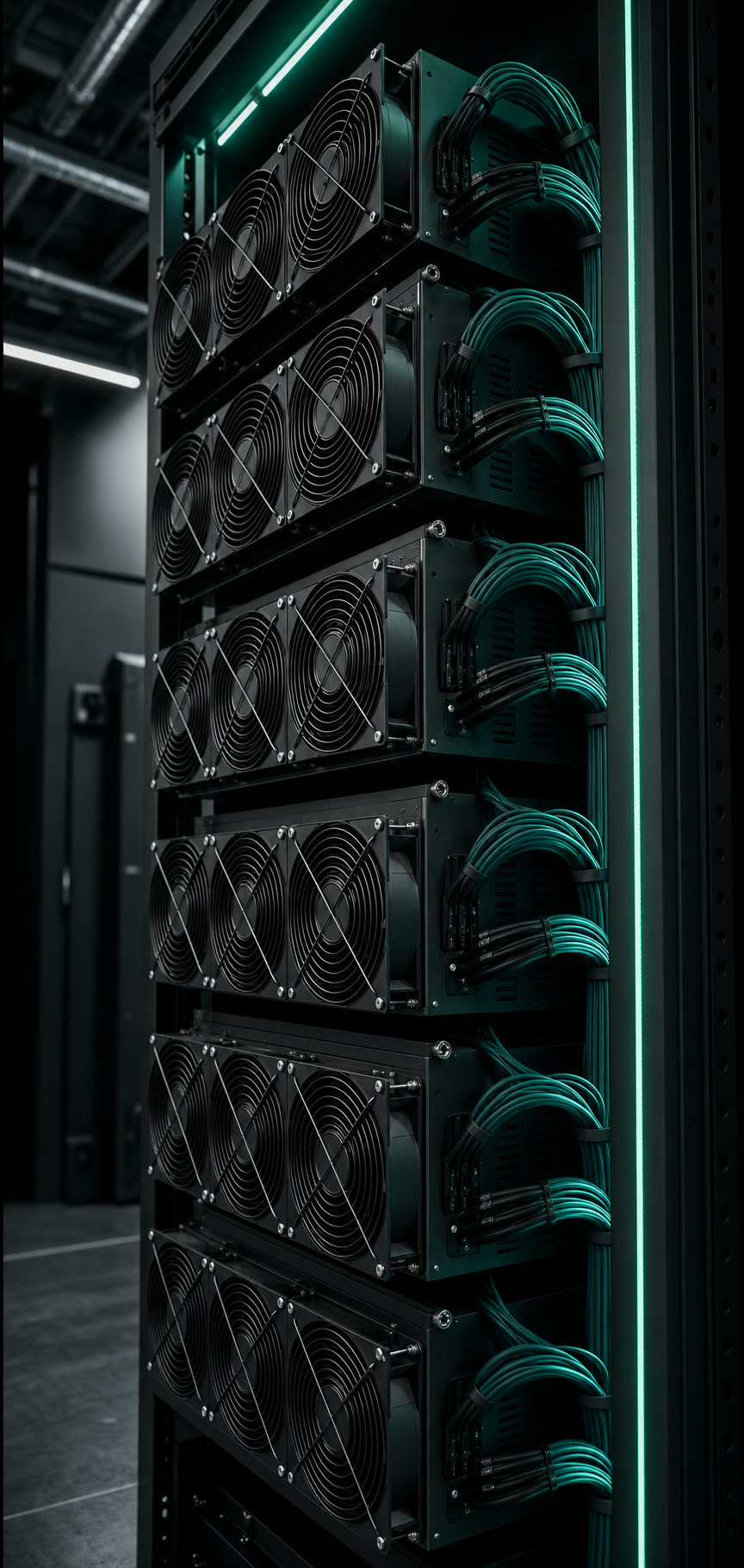
Kasper Transactions is strategically leapfrogging to KS7-class hardware in 2025 and 2026, an active transition rather than a completed one. The specifications below describe the IceRiver KS7 hardware family the company is adopting.
| Released | April 2025 |
|---|---|
| Algorithm | kHeavyHash |
| Hashrate | 30 TH/s |
| Power consumption | 3500W |
| Energy efficiency | Roughly 116 to 117 J/TH |
| Cooling | Air-cooled, four-fan design |
| Dimensions | Roughly 430 x 195 x 290mm |
| Weight | Roughly 16.5 to 17.5kg |
These are IceRiver KS7 hardware family specifications, verified across multiple hardware retailer listings. They describe the characteristics of the hardware Kasper Transactions is adopting, not a claim about the exact number of units the company owns.
Why the move matters
Efficiency and throughput gains from KS1 to KS7
Efficiency
KS7-class hardware operates at roughly 116 to 117 joules per terahash, a meaningful efficiency profile for kHeavyHash mining compared with earlier entry-level hardware like the KS1.
Throughput
At 30 TH/s per unit, KS7-class machines contribute meaningfully more hashrate than the entry-level hardware that made up the original 2023 cluster.
Reward stability
Higher efficiency and throughput per unit support the company's goal of long-term reward stability as it scales renewable-powered settlement capacity.
Built for kHeavyHash
Dedicated ASIC hardware, not general-purpose compute
kHeavyHash is a Kaspa-exclusive algorithm combining a matrix-multiplication step with a SHA-256 pass. Because it is specific to Kaspa, it is mined with dedicated ASIC hardware such as the IceRiver KS-series, rather than general-purpose CPUs or GPUs.
Read the Kaspa protocol explainer →